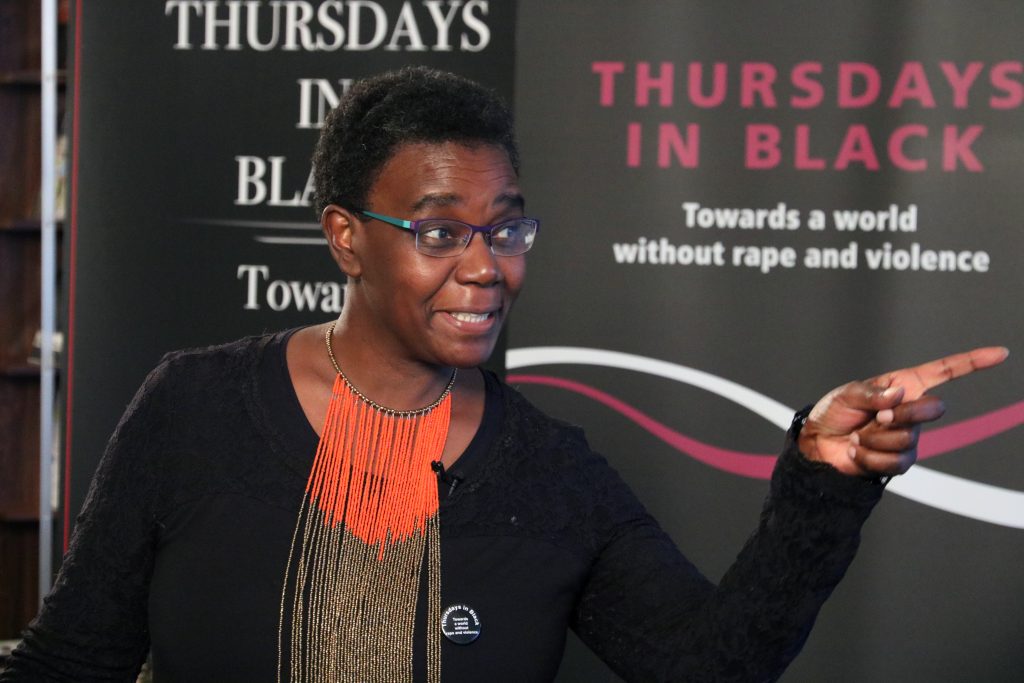

(Photo Credit: Albin Hillert/WCC)
John Blevins, Associate Research Professor from Emory University shared the journey of faith engagement in HIV and AIDS at the #Faith2EndAIDS pre-conference in #AIDS2018.
Speech transcript
1996 was the year when the fundamental calculations of HIV shifted in the United States and Europe in lots of ways, infection was no longer a cause for to plan for and calculate the days until your death and HIV became a chronic infection that could be managed and not a terminal disease.
1996 was also the year that much of the Christian theological writing my own tradition.
Much of the Christian theological writing on HIV began to slow and to cease, at least in the European and North American context.
For over a decade before that, pastors and laypeople and academic theologians had called the church to respond to HIV.
The World Council of Churches published its first report, HIV in the churches in 1986.
A decade before bills edge of death, resurrection.
That report and a number of others like it both in the Christian traditions and from other traditions called people of faith to move beyond fear and rejection and stigmatization.
To respect and compassion and care.
We responded to the reality of death that was so associated with this disease by focusing on our shared humanity.
But when death was no longer inevitable, and it was the no longer that specter that haunted the course of HIV disease progression, a lot of the theological reflection by people who have.
The name Doctor at the front of their name or Reverend at the front of their name, began to slow down.
We didn’t have as much to say about life with HIV as we had to say about death with HIV.
The late 90s was a time to catch our breath and maybe that’s why we didn’t say as much.
We began to give thanks for the reality of lives.
Measured again in years and not in days, and we had a chance to kind of catch our breath and to mourn.
The loss of 1,000,000.
Who had died and who continued, and to continue to advocate for a church that would open its doors to queer folk like.
Me, who had lived through this.
Litany of funeral and prayers for the dead.
But we were wrong.
It took a few years for religious communities in North America to realize that there was still work to be done around the call to justice to make treatment available for everyone in our own countries, and to make treatment available for everyone around the world who were infected beyond the global north.
That delay when we may palter to catch our breath again, marks for us in the West a horrible stain.
Our friends and partners weren’t dying, but of course millions around the world still work.
They still are.
UNAIDS played a role in waking us to the reality of what was happening in the rest of the world and the World Council of Churches joined with its new Geneva neighbor to once again call our church is the theological reflection to ministries of pastoral care and compassion and to movements for social justice and advocacy.
As the new Millennium approach and by the first few years of the 21st century, the Global Fund and PEPFAR had been launched, in part because of those kinds of efforts.
And recount the worst element of my fate.
Traditions response to HIV to remind us of our own silences.
Ashamed of that silence, some of us transferred that stigma that silence onto stigma for persons living with age, HIV and AIDS, demanding that they be silent.
I recount some of the history best elements to remind us how powerful our voices can be.
And our actions can be when they are fueled by a vision of Godly compassion and justice and advocacy.
Called reminding us that we can see again and we can remember the shared covenants of our various religious traditions.
That we can embrace those living with HIV and make space for their voices and actions to lead us.
The history of our faith traditions response to HIV is still being written. We are here in Amsterdam in 2018 to rededicate ourselves as people of faith.
The efforts to live into a world without AIDS and we can see the path that can lead us there.
It will take effort and resources and a commitment to continue and even redouble our efforts.
But we have the method we have the means we can see the way through this.
The question in front of us is do we have the will?
As people of faith, will we recommit ourselves?
To what it will take to advocate to our national government and global funders not only to maintain treatment targets and clinical systems, but to expand them.
As people of faith, will we ensure that the children who were living with HIV who’ve been part of our faith-based pediatric HIV programs have everything that they need as they grow into adolescence and adulthood to negotiate safer sex and responsible decisions of intimacy? marriage? Family? partnerships?
Or will we leave them hanging because we don’t know how to talk about sex?
As people of faith, will we listen to the revelation of God revealed in the testimony of those who are still marginalized and silenced by the stigma of HIV.
Knowing that that stigma is still today often fueled by religion, those are the questions in front of us and theologically, I can’t help but wonder if the challenge in front of us is to see God at the work God at work in the midst of this epidemic not only in the midst of so much death and dying.
That was part of the response in the early 1980s and 90s, but also in the midst of life.
Surely our faith traditions have something to say theologically, not just about walking with those dying with HIV.
But to hear from them as trhey live with HIV.
Now, I’m not sure the world would really think that’s the case. The researchers and the doctors and the civil society advocates who will fill the Convention Center here in a few days could fill this room 100 times over.
Their stories are the dominating stories of what is said about HIV and AIDS today, and many of us in this room will be part of that as well, and that’s all well and good.
But our faith traditions have a story to tell.
I believe and try to worship a God who is active and loving in death, yes, but also active and loving in life.
An important one, I would say.
I believe that because in April of 1996 I brought my housemate home in a car not to die.
But to live.
And that is a testimony to the reality of medical research and advancement in clinical care, because a class of drugs brought him back from death.
But it was also a testimony to a God who sustains us and walks with us through the valley of the shadow.
And sometimes that walks, takes us into death, and sometimes it takes us back into life.
Achieving a vision of a world without HIV will require the benefits of medical research and breakthroughs and advancements in clinical care.
We have to stay committed to that.
But it will also require those of us who were people of fate to stand together as an act of faith to call our leaders to lead and to keep their promises.
For those among us not relegated to the social margins, achieving this vision will require us to listen to those whose voices have not been heard.
For those of us who have been relegated to the social margins, achieving this vision will require us to trust that God does give us the words to testify to grace, even when many in the world refuse to see that such grace is at work, and to have the courage to speak that truth.
That’s our challenge.
But it’s also our hope and we are not alone.
We are surrounded by a great cloud of witnesses who go before us.
And we are heirs to life.
We are sustained by a God who is still active and working in this world to bring about healing and reconciliation and peace.
And we need to see that vision in a world that desperately needs those things today.
So we are rooted not in death, but in life.
And we are redeemed by love.
So we have what we need to make this vision a reality.
A vision of a world without aids of reality and it’s ours to choose death and life.
It’s placed before us the scriptures ask us, implore us to choose life.
The question for us.
Will we?
Thank you.