Christ’s teaching on hospitality should inform how we vote

Sermon on the Eleventh Sunday after Trinity
May the words of my mouth and the meditations of all our hearts be acceptable in Thy sight oh Lord our strength and our Redeemer.
I’m wondering whether this gospel passage was the beginning of dinner placecards; where the host could indicate beforehand who’s sitting where so that you don’t get embarrassed at a dinner party. That certainly would have solved some of these problems. But Jesus coming to this particular meal on a Sabbath is speaking about more than just the places of honour at the dinner table, about more than whether you exalt yourself or whether you are humbled.
Jesus is ultimately speaking about hospitality, and certainly the theme of hospitality is picked up for us very strongly in today’s reading from the epistle to the Hebrews, Chapter 13. And it starts with: “Let mutual love continue. Do not neglect to show hospitality to strangers.” So the theme that flows through both the Epistle and the Gospel for this morning is very strongly one of hospitality.
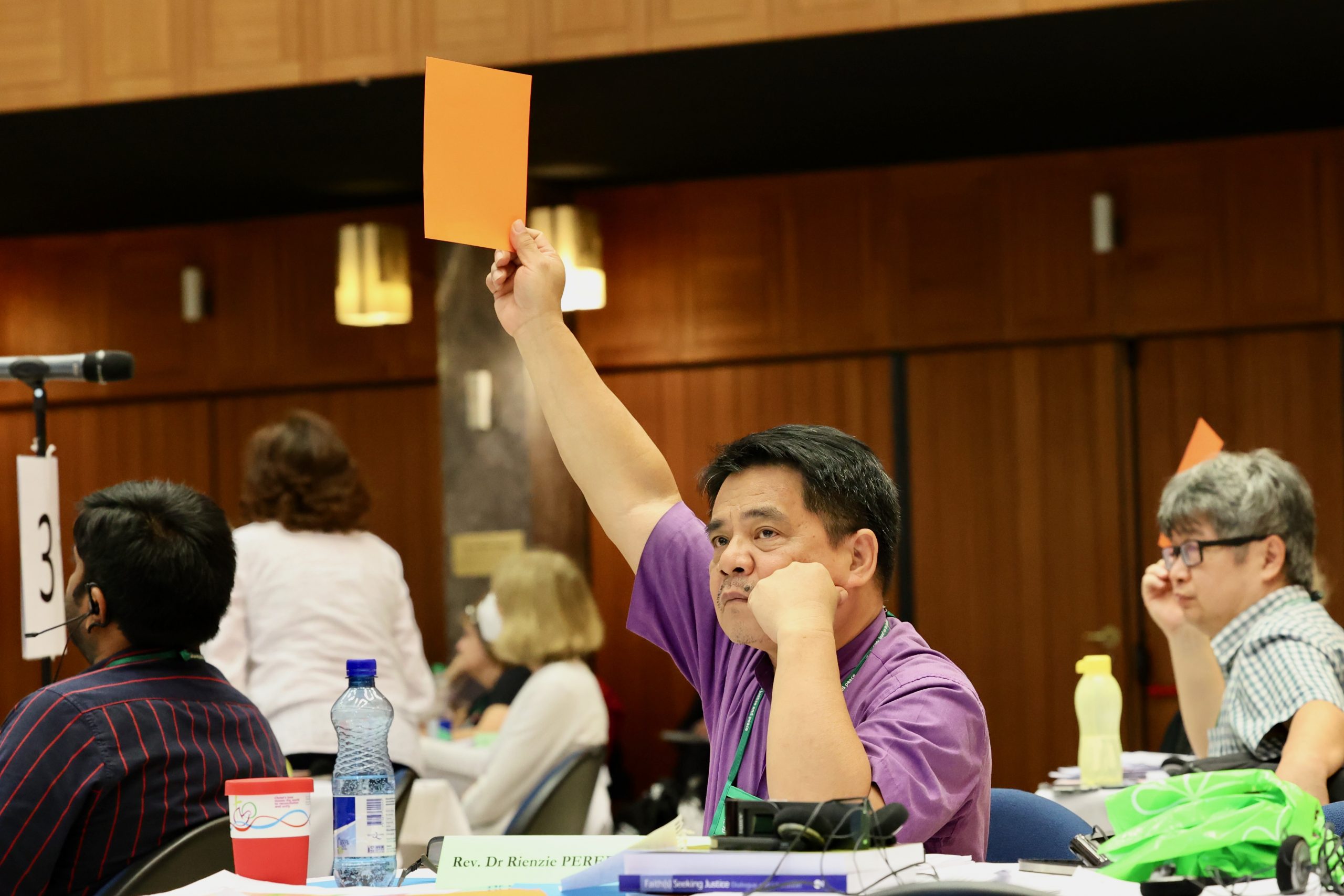
And I wonder whether we really can think of whether this hospitality touches us in our daily lives. And of course it does. In so many different ways, and one of the ways in which hospitality is crucial to us in our daily lives is what we are going to be doing the coming two weeks here in Sweden. You can go today and you can go cast your vote, or you can wait until the 11th of September, but your vote must be cast.
One of the things that the church can teach is not how you vote, but that you must vote, that you have a responsibility to fulfil this civil obligation. You have to give direction as we move forward. So those of you who have opportunity to vote, please do so. But unlike what happens in the Church of Sweden, where party politics is very strong, in the Anglican church I tend to follow the teaching of the late and Great Archbishop Desmond Tutu, who absolutely forbade those of us who were clergy in the Anglican Church of Southern Africa to be card carrying members of any political party. Because he said, you must minister to all.
And while I ministered to all I preached to all and I call for hospitality. You see, hospitality is not just about presenting a meal. Hospitality is also about the way that you welcome the stranger. And welcoming the stranger could very well be the way that, certainly me and maybe many of you, the we were able to come to Sweden in the first place. A hospitable society enabled us to come here and work, raise families, participate in this church today, not be forced to follow a faith that we don’t want to, but to follow our own. A choice to be the denomination that we choose to be or the faith that we choose to hold. That is hospitality. That is welcoming the stranger that is in many instances is giving to those who don’t have the capacity at that moment to give back.
So if you didn’t think hospitality had anything to do with your daily life, Oh my God! It does so much. So much.
I love a story on the difference between heaven and hell, and I may have told you, and if I have bear with me. If not, I hope you find it illuminating. Apparently there was a great philosopher who journeyed far and wide to try and find the difference between heaven and hell. And eventually he came to a village and they said to him, “oh, we can show you absolutely the difference between heaven and hell.”
And so they took him into a great banquet hall. And in this great banquet hall he found the tables laid and with all that was wonderful. On the table was the food that reminded you of home. On the table was the food that enticed you to explore. On the table was every delicacy you can imagine. And people sat at the tables………. miserable. Because for all of them one hand was bound behind their back. And on the other a long spoon was bound. So long that you couldn’t get it anywhere near your mouth.
And the guide said to the man is HELL.
And then he took him out of that room into a second banqueting room. And in the second banqueting room, the thing that surprised him was that everything seemed to be almost identical. The tables were equally heavily ladened. The choice on the tables was equally grand. But the difference was that people were joyous and were celebrating! And yet they too had one arm bound behind their back and this long spoon bound to the other arm
The difference was here they dished up food and served those on the other side of the table. So all were satisfied. And it was the attitude of shareing that made the difference.
Between hell and heaven.
So in today’s gospel, Jesus reminds us to cast open our eyes and our hearts. And to open our homes and our hearts and to bring in the stranger. To welcome those who we find uncomfortable; the sick the lame and the lazy. Everybody who God loves. And my sisters and brothers, because God’s love knows no bounds, as each one of us experiences today anew with the life giving love of God, as we come and we celebrate and we share in the banquet which is Christ’s own body and blood.
So we are invited to share generously in our communities, in our homes.
And in our voting.
Amen.’