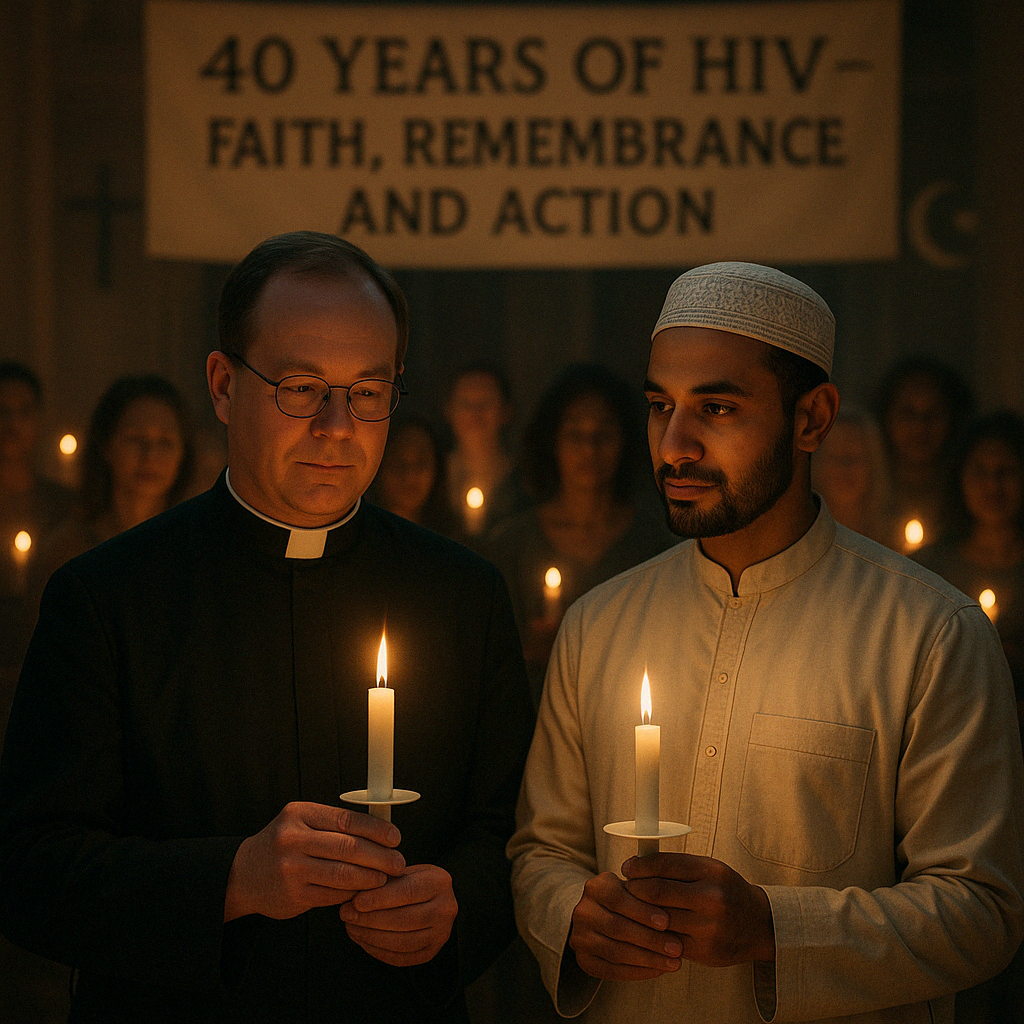
This year marks over four decades since the HIV virus was first identified. As I stood before the gathered community at St. — Church, I felt both the weight of history and the fire of purpose. More than 40 years on, we have not yet ended HIV as a crisis—and that truth should shake us.
The 2024 UNAIDS report gives us both hope and hard facts. If we were on target, the world would have recorded only 370,000 new infections this year. Instead, the number was over 1.2 million. We should have added 7 million more people to treatment programs—but we fell short. And while we need $29 billion annually to reach our 2030 goal of ending AIDS as a public health threat, only $18 billion has been secured. That’s an $11 billion gap—not just in funding, but in global commitment.
I shared these figures not to dishearten, but to awaken. Everyone in that room, everyone reading these words—you are part of the solution.
A Voice of Faith: Mohammed Farah
One of the most powerful moments of the evening came from my brother in faith, Mohammed Farah, a Muslim man living with HIV and a fellow advocate with INERELA+ Europe. His courage moved me deeply.
Mohammed spoke about being diagnosed at a time when there were no conversations about HIV in his community. As a devout Muslim and former educator, he described the fear and isolation that followed. “The first questions I asked were: Will I die? How long do I have?” he recalled.
In those early years, there was no space for Muslims to discuss HIV—no support from religious leaders, no acknowledgment from the pulpit. That silence, Mohammed said, was as heavy as the diagnosis itself.
But his words also carried hope. He thanked the Swedish Church for opening its doors and creating a space where he could share his truth. “I am a Muslim. I’ve lived with HIV for 35 years. And today, I begin again,” he said.
Our Shared Mission
The message of our gathering was clear: HIV is not just a health issue—it’s a spiritual, social, and moral one. Ending this epidemic requires more than medicine. It requires compassion, justice, inclusion, and faith.
We must not let stigma silence anyone—regardless of their faith, background, or status. We must be louder than fear. Braver than shame.
Forward Together
As a priest and chaplain, I believe in the power of presence, of prayer, and of policy. I believe that each one of us can help close the gap—not just in numbers, but in empathy.
We gathered to remember. We gathered to mourn. We gathered to hope.
But most importantly—we gathered to act.