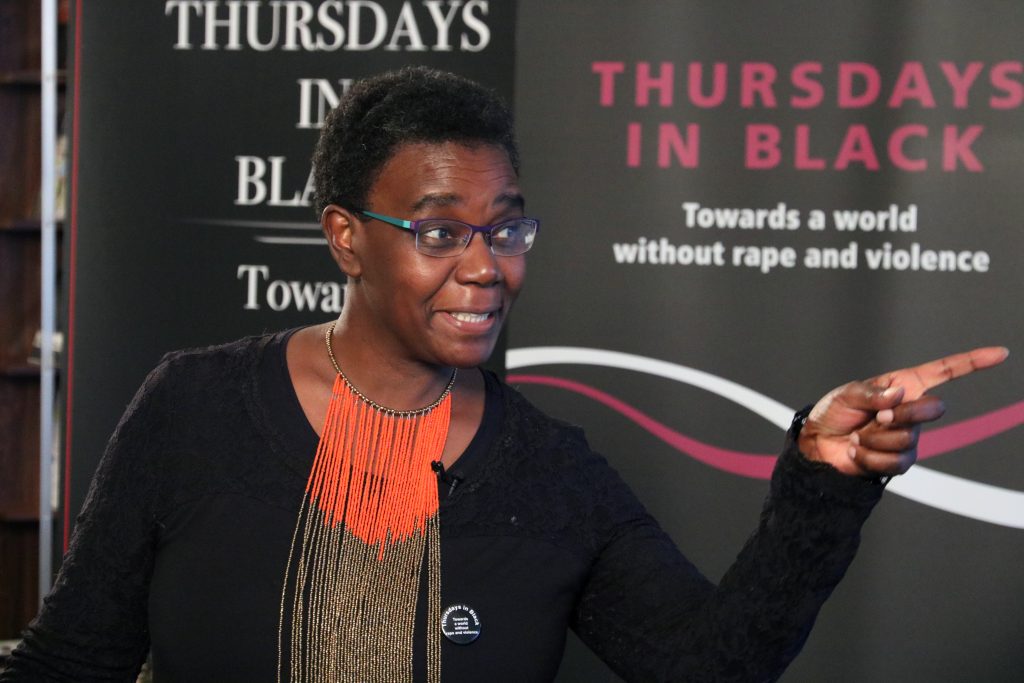

Photo credit: Albin Hillert/WCC
Introduction
In May of 2000, my world changed forever. I tested HIV-positive. The news hit me like a storm, and I knew instantly that this wasn’t something I could hide or bury deep inside. I had to talk about it, to face it, but the weight of that truth was suffocating. HIV carried a stigma that didn’t just affect me; it cut deeply into the lives of my family and my community. And so, I started my journey of disclosure, not knowing where it would lead or how I would survive.
Confronting My Diagnosis
When the doctor delivered my results, he didn’t sugarcoat it. My immune system was already collapsing, my CD4 count was under 200, and my viral load was a staggering 150,000. In the medical world, that meant AIDS. The doctor was blunt: without treatment, I might not live another six months. If I somehow managed to start medication, I could stretch that to five or six years. But I had a five-year-old son, David, and all I could think about was how desperately I wanted to live for him. I couldn’t imagine him growing up without me, losing his father before even reaching his teens.
Treatment options in South Africa back then were almost non-existent, but through trial medication, I clung to the hope of survival. With that glimmer of life, I knew I had to tell my family. My father was the first. His reaction was filled with pain and disbelief, and he told me, “This is too much for me to bear. You have to tell your sisters.” The news didn’t just impact me; it rippled through the people I loved the most.
Facing Stigma in My Community
Being a religious leader added another layer of fear. The church was my life, my community, and my source of purpose, yet it was also a place where stigma could thrive. I had to confront that head-on. I remember the day I went to see my bishop. I laid it all out, “Bishop Brian, I’m HIV-positive. If you want to fire me, do it now. I can’t live under the stress of wondering if I’ll be cast out.” To my surprise, he didn’t reject me, but he asked me to keep silent. “Please don’t tell anyone else,” he said. I stayed in my parish, but the silence was a heavy burden.
The Beginning of INERELA+: Finding Kindred Spirits
Around that time, I realized I wasn’t alone. There were others like me—religious leaders also living with HIV, fighting their own battles in isolation. Two extraordinary leaders, Dominic Christopher Allan and Canon Gideon Byamugisha, inspired me. Dominic, a Dutch Reformed minister, had contracted HIV through blood transfusions as a hemophiliac in 1987. Despite his diagnosis, he and his fiancée chose to stay together and build a life. Meanwhile, Gideon, from Uganda, found himself suddenly widowed and later learned his wife had died of AIDS-related illnesses. He turned his grief into a powerful ministry dedicated to HIV awareness.
Our paths finally crossed at an Anglican Church conference in 2001. I snuck into the event, desperate to be part of this gathering of faith leaders who were discussing HIV openly. It was there, in the shadows of that conference, that I met Gideon. We bonded over our shared experiences and realized something profound: we couldn’t continue to fight this fight alone.
Creating a Network of Support
That realization sparked the birth of something extraordinary. In early 2002, we held a retreat in Zimbabwe, gathering 40 people, eight of whom were HIV-positive. It was more than just a meeting; it was a sanctuary. We dreamed big, envisioning a network that would support religious leaders living with HIV or those personally affected by the virus. Our ideas became INERELA+.
But building INERELA+ wasn’t easy. We had no money, no funding, and no guidebook. I had to learn how to write funding proposals from scratch, scouring the internet to understand terms like “log frame.” Somehow, through sheer determination and the help of supporters like USAID, we secured our first grant. That funding allowed us to run retreats in places like Kenya and Uganda, where we created country networks, empowering local leaders to take action against HIV.
Growth and Expansion
By 2008, INERELA+ was becoming a global movement. We spoke at international conferences, including the International AIDS Conference in Mexico City. The network was no longer just a support group; it had evolved into a beacon of advocacy, addressing issues like gender equality and the inclusion of the LGBTQ+ community. I stayed with INERELA+ until 2012, and by then, it was clear that the organization needed new leadership to continue growing. Reverend Pumzile Mabizela, who succeeded me, brought in new skills and perspectives, transforming the network even further.
A Legacy of Hope and Advocacy
Looking back, I am humbled by how far we’ve come. INERELA+ continues to thrive, with ambassadorial training programs and a global reach. The fight isn’t over, but the seeds we planted have grown into a powerful force. We’ve shown that religious leaders can be warriors of compassion, using faith to heal and uplift rather than condemn.
This journey wasn’t just about survival; it was about transforming pain into purpose and finding strength in the very community where I once feared rejection. Together, we’ve made a difference, and together, we continue to fight.