Photo credit: Sean Hawkey/WCC
The Challenge of Compassion: A New Year’s Reflection
At the start of a new year, I find myself reflecting on resolutions and the intentions we set to shape our lives moving forward. But this year, as I listened to the sermon, a deeper, more profound challenge presented itself: the call to recognize Christ not as a distant symbol but as a living, breathing presence in the faces of those who suffer and are marginalized.
The Central Theme: Responding to Christ in Others
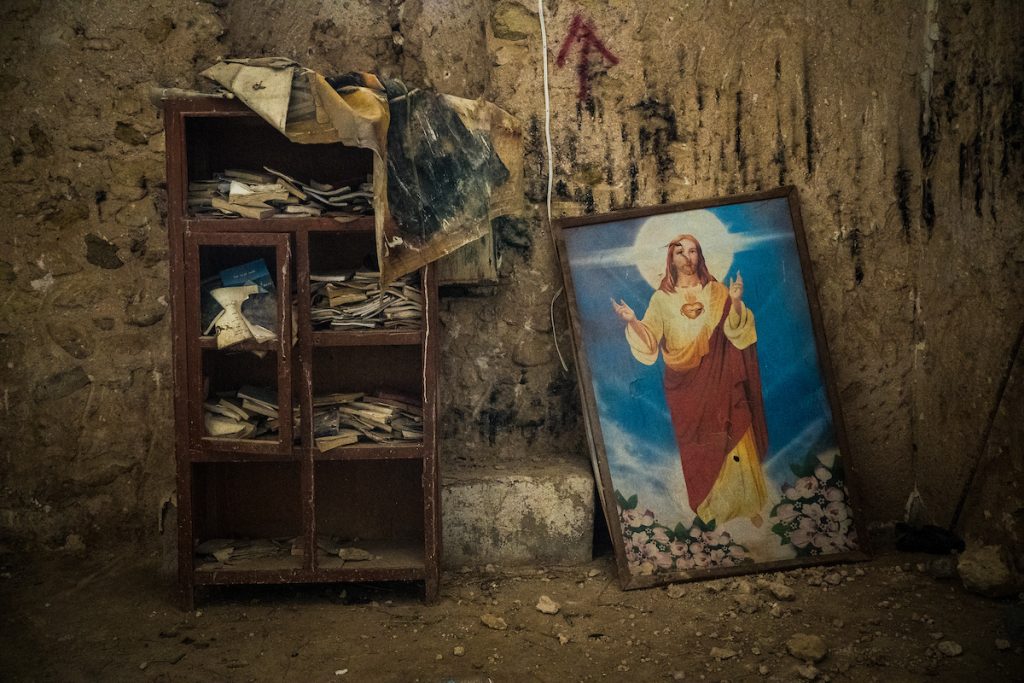
The image that struck me most during the sermon was that of a painting by South African artist Colby. I remember how vividly the speaker described it. The painting depicts Jesus not on a cross but sitting on a hospital bed, covered in the lesions of Kaposi’s sarcoma, a cancer associated with AIDS. The thought of Christ suffering, not from nails but from social isolation and rejection, stirred something deep within me.
This painting hung for years in Saint George’s Cathedral in Cape Town, bearing a haunting inscription: “When I was hungry, you did not feed me; when I was naked, you did not clothe me; when I was sick, you did not visit me.” I could feel the challenge pressing upon me, asking how I respond to Christ in the suffering and marginalized around me.
Reflections on Society and Responsibility
• Historical Context: The speaker took us back to the HIV crisis in South Africa during the 1990s and early 2000s, a time when the country bore the heavy burden of the epidemic. The Church had to ask itself difficult questions: Who is our neighbor, and how do we respond? As I listened, I wondered about my own role today. Am I paying attention to the suffering around me, or am I content to remain ignorant or self-protective?
• Art as a Wake-Up Call: Colby’s painting, the speaker emphasized, was not meant to comfort but to disturb, to jolt us awake. I thought about how art can have that effect—how it can break through complacency and demand a response.
The New Year: A Call to Awareness
As I thought about my own New Year’s resolutions, I realized that the sermon was pushing me to reconsider what these goals should be. Instead of focusing solely on self-improvement, I felt challenged to think about my place in the world and my responsibility toward others.
• Scriptural Guidance: The speaker used passages from Ecclesiastes and Matthew, reminding us that “there is a time for everything.” I found myself asking: Is this the time for me to open my eyes, to really see the needs of those around me, and to act with compassion?
• Practical Implications: The call isn’t just about performing random acts of kindness, like buying a coffee for someone in need. It’s a call for a fundamental shift in how I live. How do I engage in politics? How do I work in my office, treat my family, and interact with strangers? These questions made me realize that living compassionately is a daily practice, one that touches every aspect of life.
The Philosophy of ‘Namaste’
I found solace and clarity in the Indian greeting “Namaste,” which the speaker mentioned. It means, “The God in me responds to the God in you.” This simple yet profound concept captures the essence of the message: to see the divine in every person and act accordingly. The idea resonated deeply with me, a reminder that my daily interactions can be sacred if I recognize the divine spark in everyone.
A Prayer for the New Year
The sermon ended with a prayer, one that has stayed with me as I navigate this new year. It was a heartfelt plea for blessings, not just for me and my loved ones, but for all of us to bring Christ into the world through our actions. As I prayed along, I felt the weight of the challenge, but also the hope that this year, 2023, can be different if I make a conscious effort to live compassionately.
Conclusion
This message continues to challenge me, reminding me that a compassionate worldview requires more than good intentions. It asks me to break free from ignorance, to pay attention, and to act deliberately. The call is clear: to see the face of Christ in every person, especially those who make me uncomfortable or who are suffering. As I move into this new year, I carry this call with me, hoping to live it out in word and deed, to bring Christ into every interaction.