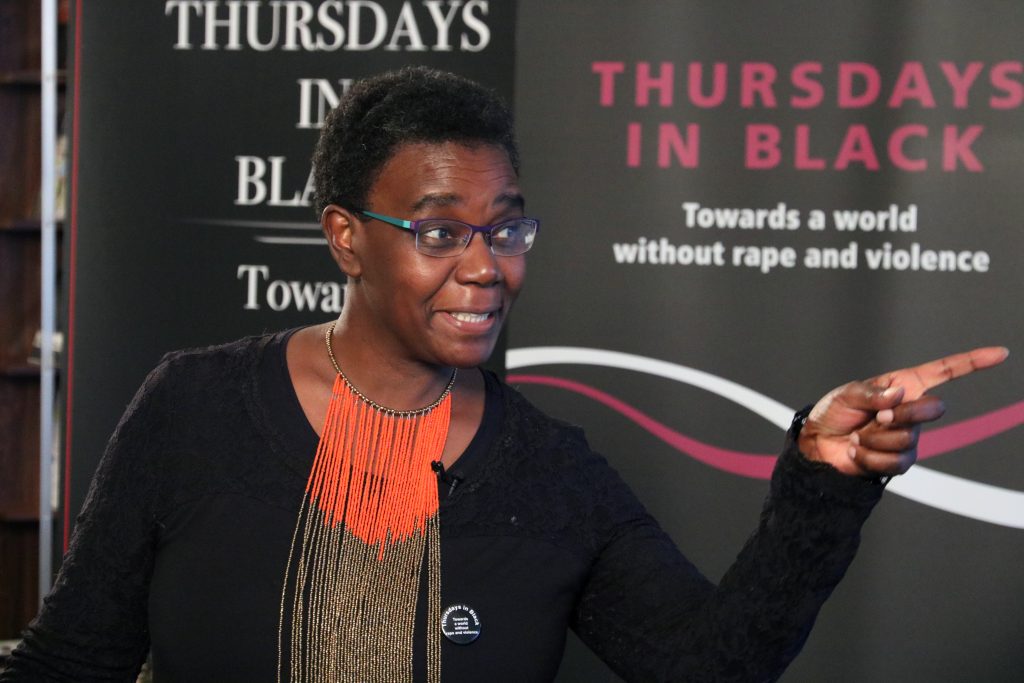

Photo credit: Albin Hillert/WCC
Engineer Trelly Marigza, a passionate advocate for gender equality, recently spoke out about the critical need for LGBTQ+ inclusion in the Philippines. Drawing from her extensive experience in gender advocacy, Marigza highlighted both the challenges and opportunities that accompany the push for equality, especially within a society shaped by deep-rooted cultural and religious beliefs.
In a recent discussion, Marigza underscored that the fight for LGBTQ+ rights is intrinsically linked to the broader struggle for human rights and social justice. “Advocating for LGBTQ+ inclusion isn’t just a separate issue,” she stated. “It’s an essential part of a larger movement for equality and justice.” She emphasized the interconnected nature of the struggle, linking it to ongoing efforts for women’s rights and the need for solidarity in fighting all forms of discrimination.
Marigza explored how societal and religious structures perpetuate discrimination against LGBTQ+ individuals. In the Philippines, the influence of the Catholic Church and traditional family norms often suppress open conversations about sexuality, reinforcing stigma and limiting acceptance. These entrenched views present significant hurdles, she noted, for those working to create a more inclusive society.
Despite these challenges, Marigza pointed to meaningful progress made by institutions like the United Church of Christ in the Philippines (UCCP). The UCCP became the first denomination in the country to release a policy statement on LGBTQ+ inclusion. “It’s a significant step forward,” Marigza acknowledged, praising the church’s courage in taking a stand. However, she cautioned that conservative attitudes still prevail within the church, and achieving full acceptance is an ongoing battle.
“Policy statements are important, but they’re not enough,” Marigza stressed. She called for real, actionable change, including the enactment of laws and ordinances to protect LGBTQ+ individuals from discrimination and violence. She also emphasized the importance of support networks—groups that provide emotional, psychological, and legal aid to those who need it.
Challenging religious institutions, Marigza addressed the contradiction between the church’s message of compassion and its treatment of LGBTQ+ individuals. She criticized practices like barring LGBTQ+ members from communion and other sacraments, calling this exclusion a betrayal of the church’s mission. “The church should be a place of care and inclusivity,” she argued. “It must embrace the inherent dignity and worth of every individual.”
Engineer Trelly Marigza’s advocacy is a call to action—for institutions, communities, and individuals to work together towards a more inclusive society. Her words inspire hope for change while reminding everyone that the road to equality requires both perseverance and collective effort.